
Latest Sheets
MercyMe
MercyMe is an Grammy Award-nominated and Dove Award winning American contemporary Christian band, originally formed in Greenville, Texas in 1994.
Members:
Bart Millard - Vocals
Nathan Cochran - Bass guitar
Michael John Scheuchzer - Guitars
Robin (Robbie) Troy Shaffer - Percussion
James (Jim) Philip Bryson - Keyboards
Barry Graul - Guitars
Members:
Bart Millard - Vocals
Nathan Cochran - Bass guitar
Michael John Scheuchzer - Guitars
Robin (Robbie) Troy Shaffer - Percussion
James (Jim) Philip Bryson - Keyboards
Barry Graul - Guitars




Raul Di Blasio
Raúl Di Blasio is an Argentine pianist. Date of birth: November 14, 1949 (70 years old), Zapala, Argentina





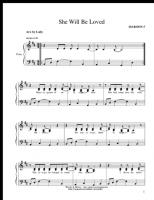
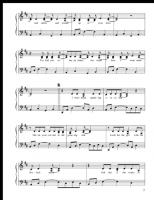
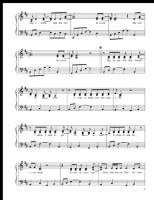
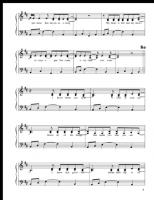
Maroon 5
Maroon 5 is a Grammy Award-winning American pop rock band. Formed with only two members at the French Woods Festival of the Performing Arts and expanded in Los Angeles, the group comprises five members: Adam Levine (lead vocals, rhythm guitar), James Valentine (lead guitar, backing vocals), Jesse Carmichael (keyboards, rhythm guitar, backing vocals), Mickey Madden (bass guitar), and Matt Flynn (drums, percussion).
Miles Davis
Miles Dewey Davis III (May 26, 1926 – September 28, 1991) was an American trumpeter, bandleader, and composer.
Widely considered one of the most influential musicians of the 20th century, Miles Davis was, with his musical groups, at the forefront of several major developments in jazz music, including bebop, cool jazz, hard bop, modal jazz, and jazz fusion. Many well-known musicians rose to prominence as members of Davis' ensembles, including saxophonists Gerry Mulligan, John Coltrane, Cannonball Adderley, George Coleman, Wayne Shorter, Dave Liebman, Branford Marsalis and Kenny Garrett; trombonist J. J. Johnson; pianists Horace Silver, Red Garland, Wynton Kelly, Bill Evans, Herbie Hancock, Joe Zawinul, Chick Corea, and Keith Jarrett; guitarists John McLaughlin, Pete Cosey, John Scofield and Mike Stern; bassists Paul Chambers, Ron Carter, Dave Holland, Marcus Miller and Darryl Jones ; and drummers Philly Joe Jones, Jimmy Cobb, Tony Williams, Billy Cobham, Jack DeJohnette, and Al Foster.
On October 7, 2008, his album Kind of Blue, released in 1959, received its fourth platinum certification from the RIAA, signifying sales of 4 million copies. Miles Davis was inducted into the Rock and Roll Hall of Fame in 2006. Davis was noted as "one of the key figures in the history of jazz".
On November 5, 2009, Rep. John Conyers of Michigan sponsored a measure in the US House of Representatives to recognize and commemorate the album Kind of Blue on its 50th anniversary. The measure also affirms jazz as a national treasure and "encourages the United States government to preserve and advance the art form of jazz music." It passed, unanimously, with a vote of 409–0 on December 15, 2009.
Widely considered one of the most influential musicians of the 20th century, Miles Davis was, with his musical groups, at the forefront of several major developments in jazz music, including bebop, cool jazz, hard bop, modal jazz, and jazz fusion. Many well-known musicians rose to prominence as members of Davis' ensembles, including saxophonists Gerry Mulligan, John Coltrane, Cannonball Adderley, George Coleman, Wayne Shorter, Dave Liebman, Branford Marsalis and Kenny Garrett; trombonist J. J. Johnson; pianists Horace Silver, Red Garland, Wynton Kelly, Bill Evans, Herbie Hancock, Joe Zawinul, Chick Corea, and Keith Jarrett; guitarists John McLaughlin, Pete Cosey, John Scofield and Mike Stern; bassists Paul Chambers, Ron Carter, Dave Holland, Marcus Miller and Darryl Jones ; and drummers Philly Joe Jones, Jimmy Cobb, Tony Williams, Billy Cobham, Jack DeJohnette, and Al Foster.
On October 7, 2008, his album Kind of Blue, released in 1959, received its fourth platinum certification from the RIAA, signifying sales of 4 million copies. Miles Davis was inducted into the Rock and Roll Hall of Fame in 2006. Davis was noted as "one of the key figures in the history of jazz".
On November 5, 2009, Rep. John Conyers of Michigan sponsored a measure in the US House of Representatives to recognize and commemorate the album Kind of Blue on its 50th anniversary. The measure also affirms jazz as a national treasure and "encourages the United States government to preserve and advance the art form of jazz music." It passed, unanimously, with a vote of 409–0 on December 15, 2009.
Elton John
Sir Elton Hercules John CBE (born Reginald Kenneth Dwight on 25 March 1947) is an English pop/rock singer, composer and pianist.
In his four-decade career, John has been one of the dominant forces in rock and popular music, especially during the 1970s. He has sold over 200 million records, making him one of the most successful artists of all time. He has more than 50 Top 40 hits including seven consecutive No. 1 U.S. albums, 59 Top 40 singles, 16 Top 10, four No. 2 hits, and nine No. 1 hits. He has won five Grammy awards and one Academy Award. His success has had a profound impact on popular music and has contributed to the continued popularity of the piano in rock and roll. In 2004, Rolling Stone ranked him #49 on their list of the 100 greatest artists of all time.
Some of the characteristics of John's musical talent include an ability to quickly craft melodies for the lyrics of songwriting partner Bernie Taupin, his former rich tenor (now baritone) voice, his classical and gospel-influenced piano, the aggressive orchestral arrangements of Paul Buckmaster among others and the flamboyant fashions, outlandishly excessive eyeglasses, and on-stage showmanship, especially evident during the 1970s.
John was inducted into the Rock and Roll Hall of Fame in 1994. He has been heavily involved in the fight against AIDS since the late 1980s, and was knighted in 1998. He entered into a civil partnership with David Furnish on 21 December 2005 and continues to be a champion for LGBT social movements. On April 9, 2008, John held a benefit concert for Hillary Clinton's presidential campaign, raising $2.5 million.
In his four-decade career, John has been one of the dominant forces in rock and popular music, especially during the 1970s. He has sold over 200 million records, making him one of the most successful artists of all time. He has more than 50 Top 40 hits including seven consecutive No. 1 U.S. albums, 59 Top 40 singles, 16 Top 10, four No. 2 hits, and nine No. 1 hits. He has won five Grammy awards and one Academy Award. His success has had a profound impact on popular music and has contributed to the continued popularity of the piano in rock and roll. In 2004, Rolling Stone ranked him #49 on their list of the 100 greatest artists of all time.
Some of the characteristics of John's musical talent include an ability to quickly craft melodies for the lyrics of songwriting partner Bernie Taupin, his former rich tenor (now baritone) voice, his classical and gospel-influenced piano, the aggressive orchestral arrangements of Paul Buckmaster among others and the flamboyant fashions, outlandishly excessive eyeglasses, and on-stage showmanship, especially evident during the 1970s.
John was inducted into the Rock and Roll Hall of Fame in 1994. He has been heavily involved in the fight against AIDS since the late 1980s, and was knighted in 1998. He entered into a civil partnership with David Furnish on 21 December 2005 and continues to be a champion for LGBT social movements. On April 9, 2008, John held a benefit concert for Hillary Clinton's presidential campaign, raising $2.5 million.
Mozart
Wolfgang Amadeus Mozart, full name Johann Chrysostom Wolfgang Amadeus Mozart (27 January 1756 â 5 December 1791) was a prolific and influential composer of the Classical era. His over 600 compositions include works widely acknowledged as pinnacles of symphonic, concertante, chamber, piano, operatic, and choral music. Mozart is among the most enduringly popular of classical composers, and many of his works are part of the standard concert repertoire.
Mozart's music, like Haydn's, stands as an archetypal example of the Classical style. His works spanned the period during which that style transformed from one exemplified by the style galant to one that began to incorporate some of the contrapuntal complexities of the late Baroque, complexities against which the galant style had been a reaction. Mozart's own stylistic development closely paralleled the development of the classical style as a whole. In addition, he was a versatile composer and wrote in almost every major genre, including symphony, opera, the solo concerto, chamber music including string quartet and string quintet, and the piano sonata. While none of these genres were new, the piano concerto was almost single-handedly developed and popularized by Mozart. He also wrote a great deal of religious music, including masses; and he composed many dances, divertimenti, serenades, and other forms of light entertainment.
The central traits of the classical style can be identified in Mozart's music. Clarity, balance, and transparency are hallmarks of his work.
Mozart's music, like Haydn's, stands as an archetypal example of the Classical style. His works spanned the period during which that style transformed from one exemplified by the style galant to one that began to incorporate some of the contrapuntal complexities of the late Baroque, complexities against which the galant style had been a reaction. Mozart's own stylistic development closely paralleled the development of the classical style as a whole. In addition, he was a versatile composer and wrote in almost every major genre, including symphony, opera, the solo concerto, chamber music including string quartet and string quintet, and the piano sonata. While none of these genres were new, the piano concerto was almost single-handedly developed and popularized by Mozart. He also wrote a great deal of religious music, including masses; and he composed many dances, divertimenti, serenades, and other forms of light entertainment.
The central traits of the classical style can be identified in Mozart's music. Clarity, balance, and transparency are hallmarks of his work.







Yoko Kanno
Yoko Kanno (菅野 よう子 Kanno Yōko?, born March 19, 1964 in Miyagi Prefecture, Japan) is a composer, arranger and musician best known for her work on the soundtracks for many games, anime films, TV series, live-action movies, and advertisements. She has written scores for famous animated works, including Macross Plus, Turn A Gundam, Cowboy Bebop, The Vision of Escaflowne, Ghost in the Shell: Stand Alone Complex, Wolf's Rain, and is the most trusted composer by veteran and new-wave directors such as Yoshiyuki Tomino, Shinichiro Watanabe and Shoji Kawamori. Kanno has also composed music for J-pop artists, the most notable being Maaya Sakamoto and Kyōko Koizumi. She is also a skilled keyboardist, and is the frontwoman for The Seatbelts, who perform many of Kanno's compositions on the various original soundtracks for which she is responsible.

Keith Jarrett
Keith Jarrett (born May 8, 1945 in Allentown, Pennsylvania) is an American pianist and composer.
His career started with Art Blakey, Charles Lloyd and Miles Davis. Since the early 1970s he has enjoyed a great deal of success in both classical music and jazz, as a group leader and a solo performer. His improvisation technique combines not only jazz, but also other forms of music, especially classical, gospel, blues and ethnic folk music.
In 2003 he received the Polar Music Prize, being the first (and to this day only) recipient not sharing the prize with anyone else.
His career started with Art Blakey, Charles Lloyd and Miles Davis. Since the early 1970s he has enjoyed a great deal of success in both classical music and jazz, as a group leader and a solo performer. His improvisation technique combines not only jazz, but also other forms of music, especially classical, gospel, blues and ethnic folk music.
In 2003 he received the Polar Music Prize, being the first (and to this day only) recipient not sharing the prize with anyone else.





Georges Bizet
Georges Bizet (25 October 1838 – 3 June 1875) was a French composer and pianist of the Romantic era. He is best known for the opera Carmen.
Bizet was born at 26 rue de la Tour d'Auvergne in the 9th arrondissement of Paris in 1838. He was registered with the legal name Alexandre César Léopold Bizet, but he was baptised on 16 March 1840 with the first name Georges, and he was always known thereafter as Georges Bizet. His father Adolphe Armand Bizet (1810-86) was an amateur singer and composer, and his mother, Aimée Léopoldine Joséphine née Delsarte (1814-61), was the sister of the famous singing teacher François Delsarte.
He entered the Paris Conservatory of Music on 9 October 1848, a fortnight before his tenth birthday. His teachers there were Pierre Zimmermann (fugue and counterpoint; often assisted by his son-in-law Charles Gounod), Antoine François Marmontel (piano), François Benoist (organ) and, on Zimmermann's death, Fromental Halévy, whose daughter he himself later married. He won first prizes for organ and fugue in 1855 and completed his earliest compositions.
His first symphony, the Symphony in C, was written in November 1855, when he was seventeen, evidently as a student assignment. It was unknown to the world until 1933, when it was discovered in the archives of the Paris Conservatory library. Upon its first performance in 1935, it was immediately hailed as a junior masterwork and a welcome addition to the early Romantic period repertoire. The symphony bears a stylistic resemblance to the first symphony of Gounod, first played earlier in the same year, and which Bizet had arranged for two pianos although present-day listeners may discern a similarity to music of Franz Schubert, whose work was little known in France at the time the symphony was written.
In 1857, a setting of the one-act operetta Le docteur Miracle won him a share in a prize offered by Jacques Offenbach. He also won the music composition scholarship of the Prix de Rome, the conditions of which required him to study in Rome for three years. There, his talent developed as he wrote such works as the opera buffa Don Procopio (1858-59). There he also composed his only major sacred work, Te Deum (1858), which he submitted to the Prix Rodrigues competition, a contest for Prix de Rome winners only. Bizet failed to win the Prix Rodrigues, and the Te Deum score remained unpublished until 1971. He made two attempts to write another symphony in 1859, but destroyed the manuscripts in December of that year. Apart from this period in Rome, Bizet lived in the Paris area all his life.
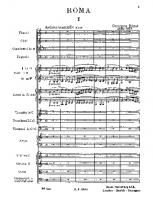
Shortly after leaving Rome in July 1860, but while still touring in Italy, he had the idea of writing a symphony in which each of the four movements would be a musical evocation of a different Italian city – Rome, Venice, Florence and Naples. On hearing of his mother's serious illness he cut short his Italian travels and returned to Paris in September 1860; she died a year later. The Scherzo of the symphony was completed by November 1861, but it was not until 1866 that the first version of the whole symphony was written. He subjected it to a number of revisions through to 1871, but died before ever producing what he considered the definitive version. For this reason, the work is sometimes described as "unfinished", but this is an inaccurate description as it was fully scored. It was published in 1880 as the Roma Symphony.
Bizet was born at 26 rue de la Tour d'Auvergne in the 9th arrondissement of Paris in 1838. He was registered with the legal name Alexandre César Léopold Bizet, but he was baptised on 16 March 1840 with the first name Georges, and he was always known thereafter as Georges Bizet. His father Adolphe Armand Bizet (1810-86) was an amateur singer and composer, and his mother, Aimée Léopoldine Joséphine née Delsarte (1814-61), was the sister of the famous singing teacher François Delsarte.
He entered the Paris Conservatory of Music on 9 October 1848, a fortnight before his tenth birthday. His teachers there were Pierre Zimmermann (fugue and counterpoint; often assisted by his son-in-law Charles Gounod), Antoine François Marmontel (piano), François Benoist (organ) and, on Zimmermann's death, Fromental Halévy, whose daughter he himself later married. He won first prizes for organ and fugue in 1855 and completed his earliest compositions.
His first symphony, the Symphony in C, was written in November 1855, when he was seventeen, evidently as a student assignment. It was unknown to the world until 1933, when it was discovered in the archives of the Paris Conservatory library. Upon its first performance in 1935, it was immediately hailed as a junior masterwork and a welcome addition to the early Romantic period repertoire. The symphony bears a stylistic resemblance to the first symphony of Gounod, first played earlier in the same year, and which Bizet had arranged for two pianos although present-day listeners may discern a similarity to music of Franz Schubert, whose work was little known in France at the time the symphony was written.
In 1857, a setting of the one-act operetta Le docteur Miracle won him a share in a prize offered by Jacques Offenbach. He also won the music composition scholarship of the Prix de Rome, the conditions of which required him to study in Rome for three years. There, his talent developed as he wrote such works as the opera buffa Don Procopio (1858-59). There he also composed his only major sacred work, Te Deum (1858), which he submitted to the Prix Rodrigues competition, a contest for Prix de Rome winners only. Bizet failed to win the Prix Rodrigues, and the Te Deum score remained unpublished until 1971. He made two attempts to write another symphony in 1859, but destroyed the manuscripts in December of that year. Apart from this period in Rome, Bizet lived in the Paris area all his life.
Shortly after leaving Rome in July 1860, but while still touring in Italy, he had the idea of writing a symphony in which each of the four movements would be a musical evocation of a different Italian city – Rome, Venice, Florence and Naples. On hearing of his mother's serious illness he cut short his Italian travels and returned to Paris in September 1860; she died a year later. The Scherzo of the symphony was completed by November 1861, but it was not until 1866 that the first version of the whole symphony was written. He subjected it to a number of revisions through to 1871, but died before ever producing what he considered the definitive version. For this reason, the work is sometimes described as "unfinished", but this is an inaccurate description as it was fully scored. It was published in 1880 as the Roma Symphony.
Rick Wakeman
Richard Christopher Wakeman is an English keyboardist, songwriter, producer, television and radio presenter, and author. He is best known for being in the progressive rock band Yes across five tenures between 1971 and 2004 and for his solo albums released in the 1970s.
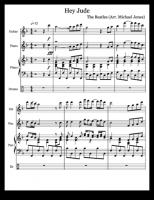
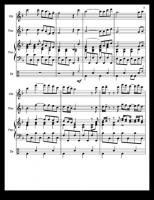
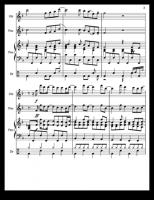
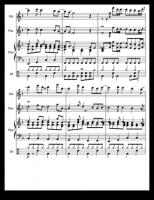
Beatles
The Beatles were an English rock band formed in Liverpool in 1960. Their best-known lineup, consisting of John Lennon, Paul McCartney, George Harrison, and Ringo Starr, became the greatest and most influential act of the rock era, introducing more innovations into popular music than any other rock band of the 20th century. Rooted in skiffle and 1950s rock and roll, the Beatles later utilized several genres, ranging from pop ballads to psychedelic rock, often incorporating classical elements in innovative ways. In the early 1960s, their enormous popularity first emerged as "Beatlemania", but as their songwriting grew in sophistication, they came to be perceived by many fans and cultural observers as an embodiment of the ideals shared by the era's sociocultural revolutions.
The band built their reputation playing clubs in Liverpool and Hamburg over a three-year period from 1960. Manager Brian Epstein moulded them into a professional act and producer George Martin enhanced their musical potential. They gained popularity in the United Kingdom after their first modest hit, "Love Me Do", in late 1962. They acquired the nickname the "Fab Four" as Beatlemania grew in Britain over the following year, and by early 1964 they had become international stars, leading the "British Invasion" of the United States pop market. From 1965 on, the Beatles produced what many critics consider their finest material, including the innovative and widely influential albums Rubber Soul (1965), Revolver (1966), Sgt Pepper's Lonely Hearts Club Band (1967), The Beatles (1968), and Abbey Road (1969). After their break-up in 1970, they each enjoyed successful musical careers. Lennon was shot and killed in December 1980, and Harrison died of lung cancer in November 2001. McCartney and Starr remain musically active.
The band built their reputation playing clubs in Liverpool and Hamburg over a three-year period from 1960. Manager Brian Epstein moulded them into a professional act and producer George Martin enhanced their musical potential. They gained popularity in the United Kingdom after their first modest hit, "Love Me Do", in late 1962. They acquired the nickname the "Fab Four" as Beatlemania grew in Britain over the following year, and by early 1964 they had become international stars, leading the "British Invasion" of the United States pop market. From 1965 on, the Beatles produced what many critics consider their finest material, including the innovative and widely influential albums Rubber Soul (1965), Revolver (1966), Sgt Pepper's Lonely Hearts Club Band (1967), The Beatles (1968), and Abbey Road (1969). After their break-up in 1970, they each enjoyed successful musical careers. Lennon was shot and killed in December 1980, and Harrison died of lung cancer in November 2001. McCartney and Starr remain musically active.





Yuki Kajiura
Yuki Kajiura (梶浦 由記 Kajiura Yuki?, born August 6, 1965 in Tokyo, Japan) is a Japanese composer and music producer. She has provided the music for several popular anime series, such as the final Kimagure Orange Road movie, Noir, .hack//Sign, Aquarian Age, Madlax, My-HiME, My-Otome, .hack//Roots, Pandora Hearts, Puella Magi Madoka Magica, Sword Art Online, Tsubasa Chronicle and the Kara no Kyoukai movies (amongst others). She also assisted Toshihiko Sahashi with Mobile Suit Gundam SEED and Mobile Suit Gundam SEED Destiny. Kajiura has also composed for video games, including the cutscene music for Xenosaga II and the entire Xenosaga III game soundtrack.


Oscar Peterson
Oscar Emmanuel Peterson, CC, CQ, O.Ont. (August 15, 1925 – December 23, 2007) was a Canadian jazz pianist and composer. He was called the "Maharaja of the keyboard" by Duke Ellington, "O.P." by his friends, and was a member of jazz royalty. He released over 200 recordings, won seven Grammy Awards, and received other numerous awards and honours over the course of his career. He is considered to have been one of the greatest jazz pianists of all time, who played thousands of live concerts to audiences worldwide in a career lasting more than 65 years.





Amy Grant
Amy Lee Grant (born November 25, 1960 in Augusta, Georgia) is an American singer-songwriter, best known for her Contemporary Christian Music and pop music, and a New York Times Bestselling author, TV personality, and occasional actress.
Grant is considered one of the true pioneers of Gospel and Contemporary Christian music..
Grant is considered one of the true pioneers of Gospel and Contemporary Christian music..
Astor Piazzolla
Ástor Pantaleón Piazzolla (March 11, 1921 – July 4, 1992) was an Argentine tango composer and bandoneón player. His oeuvre revolutionized the traditional tango into a new style termed nuevo tango, incorporating elements from jazz and classical music. An excellent bandoneonist, he regularly performed his own compositions with different ensembles.
Piazzolla's nuevo tango was distinct from the traditional tango in its incorporation of elements of jazz, its use of extended harmonies and dissonance, its use of counterpoint, and its ventures into extended compositional forms. As Argentine psychoanalyst Carlos Kuri has pointed out, Piazzolla's fusion of tango with this wide range of other recognizable Western musical elements was so successful that it produced a new individual style transcending these influences. It is precisely this success, and individuality, that makes it hard to pin down where particular influences reside in his compositions, but some aspects are clear. The use of the passacaglia technique of a circulating bass line and harmonic sequence, invented and much used in 17th and 18th century baroque music but also central to the idea of jazz "changes", predominates in most of Piazzolla's mature compositions. Another clear reference to the baroque is the often complex and virtuosic counterpoint that sometimes follows strict fugal behavior but more often simply allows each performer in the group to assert his voice. A further technique that emphasises this sense of democracy and freedom among the musicians is improvisation that is borrowed from jazz in concept, but in practice involves a different vocabulary of scales and rhythms that stay within the parameters of the established tango sound-world. Pablo Ziegler has been particularly responsible for developing this aspect of the style both within Piazzolla's groups and since the composer's death.
Piazzolla's nuevo tango was distinct from the traditional tango in its incorporation of elements of jazz, its use of extended harmonies and dissonance, its use of counterpoint, and its ventures into extended compositional forms. As Argentine psychoanalyst Carlos Kuri has pointed out, Piazzolla's fusion of tango with this wide range of other recognizable Western musical elements was so successful that it produced a new individual style transcending these influences. It is precisely this success, and individuality, that makes it hard to pin down where particular influences reside in his compositions, but some aspects are clear. The use of the passacaglia technique of a circulating bass line and harmonic sequence, invented and much used in 17th and 18th century baroque music but also central to the idea of jazz "changes", predominates in most of Piazzolla's mature compositions. Another clear reference to the baroque is the often complex and virtuosic counterpoint that sometimes follows strict fugal behavior but more often simply allows each performer in the group to assert his voice. A further technique that emphasises this sense of democracy and freedom among the musicians is improvisation that is borrowed from jazz in concept, but in practice involves a different vocabulary of scales and rhythms that stay within the parameters of the established tango sound-world. Pablo Ziegler has been particularly responsible for developing this aspect of the style both within Piazzolla's groups and since the composer's death.
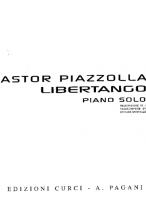
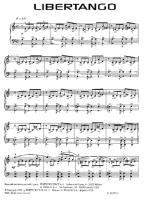
Rossini
Gioachino Antonio Rossini (February 29, 1792 – November 13, 1868) was a popular Italian composer who created 39 operas as well as sacred music and chamber music. His best known works include Il barbiere di Siviglia (The Barber of Seville), La Cenerentola and Guillaume Tell (William Tell).
Rossini's most famous opera was produced on February 20, 1816 at the Teatro Argentina in Rome. The libretto by Cesare Sterbini, a version of Pierre Beaumarchais' infamous stage play Le Barbier de Séville, was the same as that already used by Giovanni Paisiello in his own Barbiere, an opera which had enjoyed European popularity for more than a quarter of a century. Much is made of how fast Rossini's opera was written, scholarship generally agreeing upon two weeks. Later in life, Rossini claimed to have written the opera in only twelve days. It was a colossal failure when it premiered as Almaviva; Paisiello’s admirers were extremely indignant, sabotaging the production by whistling and shouting during the entire first act. However, not long after the second performance, the opera became so successful that the fame of Paisiello's opera was transferred to Rossini's, to which the title The Barber of Seville passed as an inalienable heritage.
Rossini's most famous opera was produced on February 20, 1816 at the Teatro Argentina in Rome. The libretto by Cesare Sterbini, a version of Pierre Beaumarchais' infamous stage play Le Barbier de Séville, was the same as that already used by Giovanni Paisiello in his own Barbiere, an opera which had enjoyed European popularity for more than a quarter of a century. Much is made of how fast Rossini's opera was written, scholarship generally agreeing upon two weeks. Later in life, Rossini claimed to have written the opera in only twelve days. It was a colossal failure when it premiered as Almaviva; Paisiello’s admirers were extremely indignant, sabotaging the production by whistling and shouting during the entire first act. However, not long after the second performance, the opera became so successful that the fame of Paisiello's opera was transferred to Rossini's, to which the title The Barber of Seville passed as an inalienable heritage.



Charles Wesley
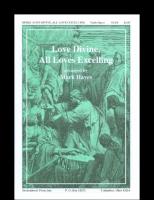
Charles Wesley (18 December 1707 – 29 March 1788) was an English leader of the Methodist movement, son of Anglican clergyman and poet Samuel Wesley, the younger brother of Anglican clergyman John Wesley and Anglican clergyman Samuel Wesley (the Younger), and father of musician Samuel Wesley, and grandfather of musician Samuel Sebastian Wesley. Despite their closeness, Charles and his brother John did not always agree on questions relating to their beliefs. In particular, Charles was strongly opposed to the idea of a breach with the Church of England into which they had been ordained. Charles Wesley is chiefly remembered for the many hymns he wrote. He founded Wesley Chapel in the village of Brayton, which is just south of Selby. His house, located nearby, can still be visited today.
Chopin
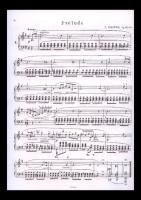
Frédéric Chopin (1 March 1810 – 17 October 1849) was a Polish composer and virtuoso pianist of the Romantic period. He is widely regarded as the greatest Polish composer, and ranks as one of music's greatest tone poets.
He was born in the village of Żelazowa Wola, in the Duchy of Warsaw, to a Polish mother and French-expatriate father, and in his early life was regarded as a child-prodigy pianist. In November 1830, at the age of 20, Chopin went abroad; following the suppression of the Polish November Uprising of 1830–31, he became one of many expatriates of the Polish "Great Emigration."
In Paris, he made a comfortable living as a composer and piano teacher, while giving few public performances. A Polish patriot,
Chopin's extant compositions were written primarily for the piano as a solo instrument. Though technically demanding, Chopin's style emphasizes nuance and expressive depth rather than virtuosity. Chopin invented musical forms such as the ballade and was responsible for major innovations in forms such as the piano sonata, waltz, nocturne, étude, impromptu and prelude. His works are mainstays of Romanticism in 19th-century classical music.
He was born in the village of Żelazowa Wola, in the Duchy of Warsaw, to a Polish mother and French-expatriate father, and in his early life was regarded as a child-prodigy pianist. In November 1830, at the age of 20, Chopin went abroad; following the suppression of the Polish November Uprising of 1830–31, he became one of many expatriates of the Polish "Great Emigration."
In Paris, he made a comfortable living as a composer and piano teacher, while giving few public performances. A Polish patriot,
Chopin's extant compositions were written primarily for the piano as a solo instrument. Though technically demanding, Chopin's style emphasizes nuance and expressive depth rather than virtuosity. Chopin invented musical forms such as the ballade and was responsible for major innovations in forms such as the piano sonata, waltz, nocturne, étude, impromptu and prelude. His works are mainstays of Romanticism in 19th-century classical music.
Walt disney
Walter Elias Disney (/ˈdɪzni/; December 5, 1901 – December 15, 1966) was an American entrepreneur, animator, voice actor and film producer. A pioneer of the American animation industry, he introduced several developments in the production of cartoons. As a film producer, Disney holds the record for most Academy Awards earned by an individual, having won 22 Oscars from 59 nominations. He was presented with two Golden Globe Special Achievement Awards and an Emmy Award, among other honors. Several of his films are included in the National Film Registry by the Library of Congress.
Dean Martin
Dean Martin (born Dino Paul Crocetti; June 7, 1917 – December 25, 1995) was an American singer, film actor, television personality, and comedian. He was one of the most well known musical artists of the 1950s and 1960s. Martin's hit singles included the songs "Memories Are Made Of This", "That's Amore", "Everybody Loves Somebody", "Mambo Italiano", "Sway", "Volare" and "Ain't That A Kick In The Head?". One of the organizers of The Rat Pack, he was a major star in four areas of show business: concert stage, recordings, motion pictures, and television.


Joe Hisaishi
Mamoru Fujisawa (藤澤 守 Fujisawa Mamoru?), known professionally as Joe Hisaishi (久石 譲 Hisaishi Jō?, born December 6, 1950), is a composer and director known for over 100 film scores and solo albums dating back to 1981.
While possessing a stylistically distinct sound, Hisaishi's music has been known to explore and incorporate different genres, including minimalist, experimental electronic, European classical, and Japanese classical. Lesser known are the other musical roles he plays; he is also a typesetter, author, arranger, and head of an orchestra.
He is best known for his work with animator Hayao Miyazaki, having composed scores for many of his films including Nausicaä of the Valley of the Wind (1984), My Neighbor Totoro (1988), Princess Mononoke (1997), Spirited Away (2001), Howl's Moving Castle (2004) and Ponyo (2008). He is also recognized for the soundtracks he has provided for filmmaker 'Beat' Takeshi Kitano, including Dolls (2002), Kikujiro (1999), Hana-bi (1997), Kids Return (1996), Sonatine (1993).
While possessing a stylistically distinct sound, Hisaishi's music has been known to explore and incorporate different genres, including minimalist, experimental electronic, European classical, and Japanese classical. Lesser known are the other musical roles he plays; he is also a typesetter, author, arranger, and head of an orchestra.
He is best known for his work with animator Hayao Miyazaki, having composed scores for many of his films including Nausicaä of the Valley of the Wind (1984), My Neighbor Totoro (1988), Princess Mononoke (1997), Spirited Away (2001), Howl's Moving Castle (2004) and Ponyo (2008). He is also recognized for the soundtracks he has provided for filmmaker 'Beat' Takeshi Kitano, including Dolls (2002), Kikujiro (1999), Hana-bi (1997), Kids Return (1996), Sonatine (1993).


Beethoven
Ludwig van Beethoven (16 December 1770 - 26 March 1827) was a German composer and pianist. He was a crucial figure in the transitional period between the Classical and Romantic eras in Western classical music, and remains one of the most respected and influential composers of all time.
Born in Bonn, then in the Electorate of Cologne (now in modern-day Germany), he moved to Vienna in his early twenties and settled there, studying with Joseph Haydn and quickly gaining a reputation as a virtuoso pianist. Beethoven's hearing gradually deteriorated beginning in his twenties, yet he continued to compose masterpieces, and to conduct and perform, even after he was completely deaf.
Born in Bonn, then in the Electorate of Cologne (now in modern-day Germany), he moved to Vienna in his early twenties and settled there, studying with Joseph Haydn and quickly gaining a reputation as a virtuoso pianist. Beethoven's hearing gradually deteriorated beginning in his twenties, yet he continued to compose masterpieces, and to conduct and perform, even after he was completely deaf.

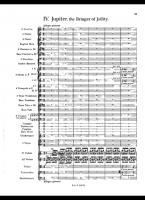
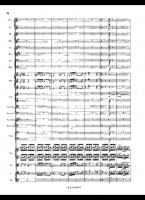
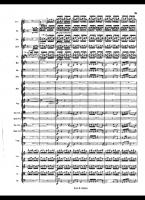
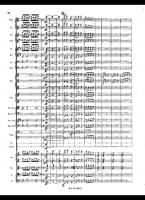
Gustav Holst
Gustav Theodore Holst (21 September 1874 – 25 May 1934) was an English composer and was a music teacher for nearly 20 years. He is most famous for his orchestral suite The Planets. Having studied at the Royal College of Music in London, his early work was influenced by Ravel, Grieg, Richard Strauss, and fellow student Ralph Vaughan Williams, but most of his music is highly original, with influences from Hindu spiritualism and English folk tunes. Holst's music is well known for unconventional use of metre and haunting melodies.
Holst wrote almost 200 catalogued compositions, including orchestral suites, operas, ballets, concertos, choral hymns, and songs (see Selected works below).
Holst became music master at St Paul's Girls' School in 1905 and director of music at Morley College in 1907, continuing in both posts until retirement.
He was the brother of Hollywood actor Ernest Cossart and father of the composer and conductor Imogen Holst, who wrote a biography of him in 1938.
Holst wrote almost 200 catalogued compositions, including orchestral suites, operas, ballets, concertos, choral hymns, and songs (see Selected works below).
Holst became music master at St Paul's Girls' School in 1905 and director of music at Morley College in 1907, continuing in both posts until retirement.
He was the brother of Hollywood actor Ernest Cossart and father of the composer and conductor Imogen Holst, who wrote a biography of him in 1938.
Koji Kondo
Koji Kondo (近藤浩治 Kondō Kōji?, born August 13, 1960) is a Japanese video game composer and sound director who has been employed at Nintendo since 1984. He is best known for scoring numerous titles in the Mario and The Legend of Zelda series.


Patsy Cline
Patsy Cline (September 8, 1932–March 5, 1963), born Virginia Patterson Hensley, was an American country music singer who enjoyed pop music crossover success during the era of the Nashville sound in the early 1960s. Since her death at age 30 in a 1963 private airplane crash at the height of her career, she has been considered one of the most influential, successful and acclaimed female vocalists of the 20th century.
Cline was best known for her rich tone and emotionally expressive bold contralto voice, which, along with her role as a mover and shaker in the country music industry, has been cited as an inspiration by many vocalists of various music genres. Her life and career have been the subject of numerous books, movies, documentaries, articles and stage plays.
Her hits included "Walkin' After Midnight", "I Fall to Pieces", "She's Got You", "Crazy" and "Sweet Dreams". Posthumously, millions of her albums have been sold over the past 46 years and she has been given numerous awards, which have given her an iconic status with some fans similar to that of legends Johnny Cash and Elvis Presley. Ten years after her death, she became the first female solo artist inducted to the Country Music Hall of Fame.
In 2002, Cline was voted by artists and members of the country music industry as number one on CMT's television special, The 40 Greatest Women of Country Music, and in 1999 she was voted number 11 on VH1's special The 100 Greatest Women in Rock and Roll by members and artists of the rock industry. According to her 1973 Country Music Hall of Fame plaque, "Her heritage of timeless recordings is testimony to her artistic capacity."
Cline was best known for her rich tone and emotionally expressive bold contralto voice, which, along with her role as a mover and shaker in the country music industry, has been cited as an inspiration by many vocalists of various music genres. Her life and career have been the subject of numerous books, movies, documentaries, articles and stage plays.
Her hits included "Walkin' After Midnight", "I Fall to Pieces", "She's Got You", "Crazy" and "Sweet Dreams". Posthumously, millions of her albums have been sold over the past 46 years and she has been given numerous awards, which have given her an iconic status with some fans similar to that of legends Johnny Cash and Elvis Presley. Ten years after her death, she became the first female solo artist inducted to the Country Music Hall of Fame.
In 2002, Cline was voted by artists and members of the country music industry as number one on CMT's television special, The 40 Greatest Women of Country Music, and in 1999 she was voted number 11 on VH1's special The 100 Greatest Women in Rock and Roll by members and artists of the rock industry. According to her 1973 Country Music Hall of Fame plaque, "Her heritage of timeless recordings is testimony to her artistic capacity."
Debussy
Achille-Claude Debussy (August 22, 1862 – March 25, 1918) was a French composer. Along with Maurice Ravel, he is considered one of the most prominent figures working within the field of Impressionist music, though he himself intensely disliked the term when applied to his compositions. Debussy was not only among the most important of all French composers but also was a central figure in all European music at the turn of the twentieth century.
Debussy's music virtually defines the transition from late-Romantic music to twentieth century modernist music. In French literary circles, the style of this period was known as Symbolism, a movement that directly inspired Debussy both as a composer and as an active cultural participant.
Debussy's music virtually defines the transition from late-Romantic music to twentieth century modernist music. In French literary circles, the style of this period was known as Symbolism, a movement that directly inspired Debussy both as a composer and as an active cultural participant.





Mariah Carey
Mariah Carey (born March 27, 1970) is an American singer, songwriter, record producer, and actress. She made her recording debut in 1990 under the guidance of Columbia Records executive Tommy Mottola, and became the first recording artist to have her first five singles top the U.S. Billboard Hot 100 chart. Following her marriage to Mottola in 1993, a series of hit records established her position as Columbia's highest-selling act. According to Billboard magazine, she was the most successful artist of the 1990s in the United States.
Following her separation from Mottola in 1997, Carey introduced elements of hip hop into her album work, to much initial success, but her popularity was in decline when she left Columbia in 2001, and she was dropped by Virgin Records the following year after a highly publicized physical and emotional breakdown, as well as the poor reception given to Glitter, her film and soundtrack project. In 2002, Carey signed with Island Records, and after a relatively unsuccessful period, she returned to pop music in 2005.
Carey was named the best-selling female pop artist of the millennium at the 2000 World Music Awards. She has had the most number-one singles for a solo artist in the United States (eighteen; second artist overall behind The Beatles), where, according to the Recording Industry Association of America, she is the third best-selling female and sixteenth overall recording artist. In addition to her commercial accomplishments, Carey has earned five Grammy Awards, and is well-known for her vocal range, power, melismatic style, and use of the whistle register.
Following her separation from Mottola in 1997, Carey introduced elements of hip hop into her album work, to much initial success, but her popularity was in decline when she left Columbia in 2001, and she was dropped by Virgin Records the following year after a highly publicized physical and emotional breakdown, as well as the poor reception given to Glitter, her film and soundtrack project. In 2002, Carey signed with Island Records, and after a relatively unsuccessful period, she returned to pop music in 2005.
Carey was named the best-selling female pop artist of the millennium at the 2000 World Music Awards. She has had the most number-one singles for a solo artist in the United States (eighteen; second artist overall behind The Beatles), where, according to the Recording Industry Association of America, she is the third best-selling female and sixteenth overall recording artist. In addition to her commercial accomplishments, Carey has earned five Grammy Awards, and is well-known for her vocal range, power, melismatic style, and use of the whistle register.
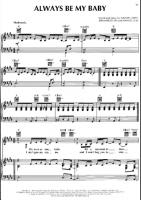
Dario Marianelli
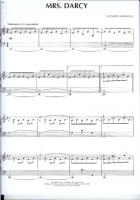
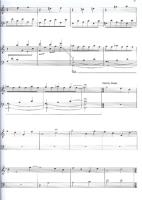
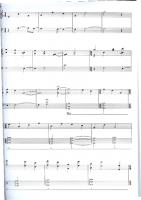
Dario Marianelli (born June 21, 1963 in Pisa, Italy) is a composer of piano, orchestral, and film music. He has composed the soundtracks for The Brothers Grimm (2005), Pride & Prejudice (2005), and Atonement (2007), the last two for which he received Oscar nominations for Best Achievement in Music Written for Motion Pictures, Original Score. He has won Best Original Score for the score of Atonement at the 80th Academy Awards and Golden Globe Award for Best Original Score. He has collaborated with Joe Wright three times, on Pride & Prejudice, Atonement, and The Soloist.
Kenny Kirkland
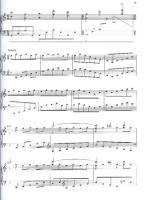
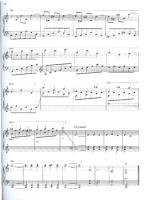
Kenneth David "Kenny" Kirkland was an American pianist/keyboardist





HIM
HiM is a dub influenced post-rock group formed in 1995 by Doug Scharin, drummer for the bands Codeine, Rex and June of 44. Their first album, Egg, was their most dub-based effort. Each successive album has gone more in a quasi-world music direction. After some recording for Crooklyn Dub Consortium and Wordsound, "Interpretive Belief System", HiM settled on a lineup of Scharin with Bundy K. Brown, Rob Mazurek and Jeff Parker, members or occasional members of Tortoise and Isotope 217. Their first album was the underground hit Sworn Eyes, produced by Doug Scharin. A few personnel changes followed, and the revamped lineup including members of June of 44. Golden released Our Point of Departure in 1999, which signified a very clear shift toward a more jazz-like sound, followed by a major American and European tour. In 2003, HiM released Many In High Places Are Not Well on Fat Cat Records, which was received as their most successful and fully realized release. Peoples was released in mid-2006, featuring a cleaner sound with more vocals than any of HiM's previous releases. Included in this line-up are Martin Perna and Jordan McLean from Antibalas, Griffin Rodriguez from Need New Body/Icy Demons, Adam Pierce (Mice Parade). The latest HiM records, "1110" and ん,released in 2008 and 2009 on Afterhours in Tokyo, are collaborations between Doug Scharin, Josh Larue and the Tokyo-based group, Ultra Living.

Air Supply
Air Supply is a soft rock duo who had a succession of hits worldwide through the late 1970s and early 1980s. It consists of British guitarist and vocalist Graham Russell (born Graham Cyril Russell, 11 June 1950, Sherwood, Nottingham, England, UK) and Australian lead vocalist Russell Hitchcock (born Russell Charles Hitchcock, 15 June 1949, Melbourne, Victoria, Australia).




Guiseppe Verdi
Giuseppe Fortunino Francesco Verdi (Italian pronunciation: ; 10 October 1813 – 27 January 1901) was an Italian Romantic composer, mainly of opera. He was one of the most influential composers of the 19th century. His works are frequently performed in opera houses throughout the world and, transcending the boundaries of the genre, some of his themes have long since taken root in popular culture - such as "La donna è mobile" from Rigoletto, "Va, pensiero" (The Chorus of the Hebrew Slaves) from Nabucco, "Libiamo ne' lieti calici" (The Drinking Song) from La traviata and the "Grand March" from Aida. Although his work was sometimes criticized for using a generally diatonic rather than a chromatic musical idiom and having a tendency toward melodrama, Verdi’s masterworks dominate the standard repertoire a century and a half after their composition.
Verdi's predecessors who influenced his music were Rossini, Bellini, Giacomo Meyerbeer and, most notably, Gaetano Donizetti and Saverio Mercadante. With the exception of Otello and Aida, he was free of Wagner's influence. Although respectful of Gounod, Verdi was careful not to learn anything from the Frenchman whom many of Verdi's contemporaries regarded as the greatest living composer. Some strains in Aida suggest at least a superficial familiarity with the works of the Russian composer Mikhail Glinka, whom Franz Liszt, after his tour of the Russian Empire as a pianist, popularized in Western Europe.
Throughout his career, Verdi rarely utilised the high C in his tenor arias, citing the fact that the opportunity to sing that particular note in front of an audience distracts the performer before and after the note appears. However, he did provide high Cs to Duprez in Jérusalem and to Tamberlick in the original version of La forza del destino. The high C often heard in the aria Di quella pira does not appear in Verdi's score.
Verdi's predecessors who influenced his music were Rossini, Bellini, Giacomo Meyerbeer and, most notably, Gaetano Donizetti and Saverio Mercadante. With the exception of Otello and Aida, he was free of Wagner's influence. Although respectful of Gounod, Verdi was careful not to learn anything from the Frenchman whom many of Verdi's contemporaries regarded as the greatest living composer. Some strains in Aida suggest at least a superficial familiarity with the works of the Russian composer Mikhail Glinka, whom Franz Liszt, after his tour of the Russian Empire as a pianist, popularized in Western Europe.
Throughout his career, Verdi rarely utilised the high C in his tenor arias, citing the fact that the opportunity to sing that particular note in front of an audience distracts the performer before and after the note appears. However, he did provide high Cs to Duprez in Jérusalem and to Tamberlick in the original version of La forza del destino. The high C often heard in the aria Di quella pira does not appear in Verdi's score.
Michael Giacchino
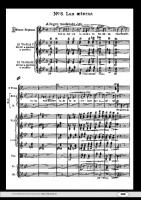
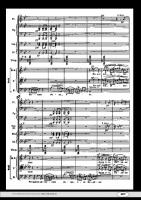
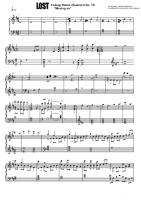
Michael Giacchino (Italian pronunciation: ; born October 10, 1967) is an American composer who has composed scores for movies, television series and video games. Some of his most notable works include the scores to television series such as Lost, Alias and Fringe, games such as the Medal of Honor and Call of Duty series, and films such as Mission: Impossible III, The Incredibles, Star Trek, Star Trek Into Darkness, Cloverfield, Ratatouille, Up, Super 8, Cars 2, 50/50, and John Carter. Giacchino has received numerous awards for his work, including an Emmy, multiple Grammys, a Golden Globe Award, and an Academy Award.
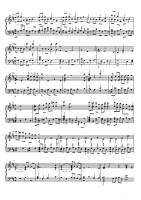
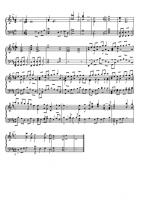
W.A. Mozart
Wolfgang Amadeus Mozart (German: , full baptismal name Johannes Chrysostomus Wolfgangus Theophilus Mozart (27 January 1756 – 5 December 1791), was a prolific and influential composer of the Classical era. He composed over 600 works, many acknowledged as pinnacles of symphonic, concertante, chamber, piano, operatic, and choral music. He is among the most enduringly popular of classical composers.
Mozart showed prodigious ability from his earliest childhood in Salzburg. Already competent on keyboard and violin, he composed from the age of five and performed before European royalty; at 17 he was engaged as a court musician in Salzburg, but grew restless and traveled in search of a better position, always composing abundantly. While visiting Vienna in 1781, he was dismissed from his Salzburg position. He chose to stay in the capital, where he achieved fame but little financial security. During his final years in Vienna, he composed many of his best-known symphonies, concertos, and operas, and the Requiem. The circumstances of his early death have been much mythologized. He was survived by his wife Constanze and two sons.
Mozart learned voraciously from others, and developed a brilliance and maturity of style that encompassed the light and graceful along with the dark and passionate—the whole informed by a vision of humanity "redeemed through art, forgiven, and reconciled with nature and the absolute." His influence on subsequent Western art music is profound. Beethoven wrote his own early compositions in the shadow of Mozart, of whom Joseph Haydn wrote that "posterity will not see such a talent again in 100 years."
Mozart showed prodigious ability from his earliest childhood in Salzburg. Already competent on keyboard and violin, he composed from the age of five and performed before European royalty; at 17 he was engaged as a court musician in Salzburg, but grew restless and traveled in search of a better position, always composing abundantly. While visiting Vienna in 1781, he was dismissed from his Salzburg position. He chose to stay in the capital, where he achieved fame but little financial security. During his final years in Vienna, he composed many of his best-known symphonies, concertos, and operas, and the Requiem. The circumstances of his early death have been much mythologized. He was survived by his wife Constanze and two sons.
Mozart learned voraciously from others, and developed a brilliance and maturity of style that encompassed the light and graceful along with the dark and passionate—the whole informed by a vision of humanity "redeemed through art, forgiven, and reconciled with nature and the absolute." His influence on subsequent Western art music is profound. Beethoven wrote his own early compositions in the shadow of Mozart, of whom Joseph Haydn wrote that "posterity will not see such a talent again in 100 years."





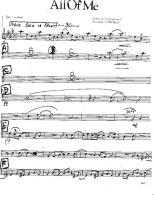
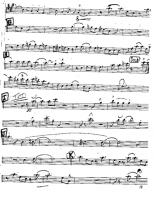
Frank Sinatra
Francis Albert "Frank" Sinatra (December 12, 1915 â May 14, 1998) was an American singer and actor.
Beginning his musical career in the swing era with Harry James and Tommy Dorsey, Sinatra became a solo artist with great success in the early to mid-1940s, being the idol of the "bobby soxers". His professional career had stalled by the 1950s, but it was reborn in 1954 after he won the Academy Award for Best Supporting Actor.
He signed with Capitol Records and released several critically lauded albums (such as In the Wee Small Hours, Songs for Swingin' Lovers, Come Fly with Me, Only the Lonely and Nice 'n' Easy). Sinatra left Capitol to found his own record label, Reprise Records (finding success with albums such as Ring-A-Ding-Ding, Sinatra at the Sands and Francis Albert Sinatra & Antonio Carlos Jobim), toured internationally, and fraternized with the Rat Pack and President John F. Kennedy in the early 1960s. Sinatra turned 50 in 1965, recorded the retrospective September of My Years, starred in the Emmy-winning television special Frank Sinatra: A Man and His Music, and scored hits with "Strangers in the Night" and "My Way".
Sinatra attempted to weather the changing tastes in popular music, but with dwindling album sales and after appearing in several poorly received films, he retired in 1971. Coming out of retirement in 1973, he recorded several albums, scoring a hit with "(Theme From) New York, New York" in 1980, and toured both within the United States and internationally until a few years before his death in 1998.
Sinatra also forged a career as a dramatic actor, winning the Academy Award for Best Supporting Actor for his performance in From Here to Eternity, and he was nominated for the Academy Award for Best Actor for The Man with the Golden Arm. His also starred in such musicals as High Society, Pal Joey, Guys and Dolls and On the Town. Sinatra was honored with the Kennedy Center Honors in 1983 and awarded the Presidential Medal of Freedom by Ronald Reagan in 1985 and the Congressional Gold Medal in 1997. Sinatra was also the recipient of eleven Grammy Awards, including the Grammy Trustees Award, Grammy Legend Award and the Grammy Lifetime Achievement Award.
Beginning his musical career in the swing era with Harry James and Tommy Dorsey, Sinatra became a solo artist with great success in the early to mid-1940s, being the idol of the "bobby soxers". His professional career had stalled by the 1950s, but it was reborn in 1954 after he won the Academy Award for Best Supporting Actor.
He signed with Capitol Records and released several critically lauded albums (such as In the Wee Small Hours, Songs for Swingin' Lovers, Come Fly with Me, Only the Lonely and Nice 'n' Easy). Sinatra left Capitol to found his own record label, Reprise Records (finding success with albums such as Ring-A-Ding-Ding, Sinatra at the Sands and Francis Albert Sinatra & Antonio Carlos Jobim), toured internationally, and fraternized with the Rat Pack and President John F. Kennedy in the early 1960s. Sinatra turned 50 in 1965, recorded the retrospective September of My Years, starred in the Emmy-winning television special Frank Sinatra: A Man and His Music, and scored hits with "Strangers in the Night" and "My Way".
Sinatra attempted to weather the changing tastes in popular music, but with dwindling album sales and after appearing in several poorly received films, he retired in 1971. Coming out of retirement in 1973, he recorded several albums, scoring a hit with "(Theme From) New York, New York" in 1980, and toured both within the United States and internationally until a few years before his death in 1998.
Sinatra also forged a career as a dramatic actor, winning the Academy Award for Best Supporting Actor for his performance in From Here to Eternity, and he was nominated for the Academy Award for Best Actor for The Man with the Golden Arm. His also starred in such musicals as High Society, Pal Joey, Guys and Dolls and On the Town. Sinatra was honored with the Kennedy Center Honors in 1983 and awarded the Presidential Medal of Freedom by Ronald Reagan in 1985 and the Congressional Gold Medal in 1997. Sinatra was also the recipient of eleven Grammy Awards, including the Grammy Trustees Award, Grammy Legend Award and the Grammy Lifetime Achievement Award.
Backstreet Boys
Backstreet Boys are a Grammy-nominated American pop group. They were the first group launched by fallen boy band mogul Lou Pearlman. They have had 13 Top 40 hits on the Billboard Hot 100 and have sold approximately 100 million albums, making them the best selling boy band of all time; they were number 1 in concert and album sales from 1997-2005 (when they earned $533.1 million). Two of their albums - Millennium (at #36) and Backstreet Boys (at #40) - are among the top 40 most popular albums of all-time.
After returning to the music scene in 2005, their sound changed dramatically, incorporating only live instruments (some of which they play themselves) and a more guitar and piano driven pop rock sound. The four-member group consists of Nick Carter, Howie Dorough, Brian Littrell and A. J. McLean. Original member Kevin Richardson left the group on June 23, 2006 to begin a family, but the four-piece refused to rule out a possible return for the singer.
After returning to the music scene in 2005, their sound changed dramatically, incorporating only live instruments (some of which they play themselves) and a more guitar and piano driven pop rock sound. The four-member group consists of Nick Carter, Howie Dorough, Brian Littrell and A. J. McLean. Original member Kevin Richardson left the group on June 23, 2006 to begin a family, but the four-piece refused to rule out a possible return for the singer.
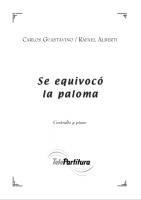
Carlos Guastavino
Carlos Guastavino was one of the foremost Argentine composers of the 20th century. His production amounted to over 500 works, most of them songs for piano and voice, many still unpublished. His style was quite conservative, always tonal and lusciously romanti




Rihanna
Rihanna (born Robyn Rihanna Fenty; February 20, 1988) is a Barbadian singer, model and fashion designer. She is the second artist, and first female, from Barbados to have received a Grammy Award (the first being Jimmy Senya Haynes). Rihanna is currently signed to the Def Jam Recordings label. She has attained four Billboard Hot 100 number ones thus far ("SOS", "Umbrella", "Take a Bow", and "Disturbia"), tying her with Mariah Carey and Beyoncé as the female solo artist with the most number ones this decade.
Rihanna came to fame in 2005 with the release of her debut album Music of the Sun, which featured her breakthrough single "Pon de Replay". Less than a year later, Rihanna released A Girl Like Me and gave her first number one single, "SOS". In 2007, Rihanna released her third studio album, Good Girl Gone Bad. The album has yielded six hit singles including five worldwide number one singles "Umbrella", "Don't Stop the Music" and "Take A Bow". Since the release of her debut album, Rihanna has amassed eleven top 40 hit singles in the U.S.
Rihanna came to fame in 2005 with the release of her debut album Music of the Sun, which featured her breakthrough single "Pon de Replay". Less than a year later, Rihanna released A Girl Like Me and gave her first number one single, "SOS". In 2007, Rihanna released her third studio album, Good Girl Gone Bad. The album has yielded six hit singles including five worldwide number one singles "Umbrella", "Don't Stop the Music" and "Take A Bow". Since the release of her debut album, Rihanna has amassed eleven top 40 hit singles in the U.S.
Johann Strauss
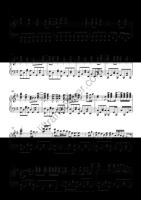
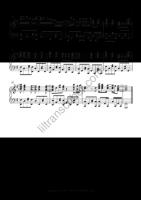
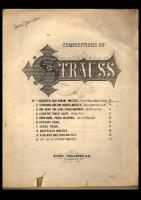
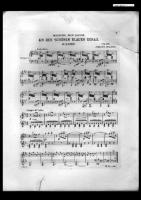
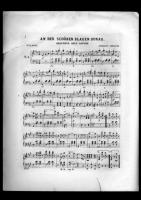
Johann Strauss I (March 14, 1804 – September 25, 1849; German: Johann Baptist Strauß, Johann Strauss (Vater); also Johann Baptist Strauss, Johann Strauss, Sr., the Elder, the Father), born in Vienna, was an Austrian Romantic composer famous for his waltzes, and for popularizing them alongside Joseph Lanner, thereby setting the foundations for his sons to carry on his musical dynasty. His most famous piece is probably the Radetzky March (named after Joseph Radetzky von Radetz), while his most famous waltz is probably the Lorelei Rheinklänge, Op. 154.
Norah Jones
Norah Jones (born Geethali Norah Jones Shankar on March 30, 1979) is an American singer-songwriter, pianist, keyboardist, guitarist, and occasional actress of Anglo-American and Bengali descent. She is the daughter of famed sitar virtuoso Ravi Shankar and half-sister of sitarist Anoushka Shankar.
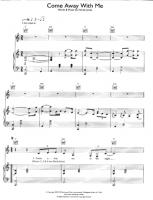
Jones' career was launched with her 2002 debut album Come Away with Me, an adult contemporary pop/vocal jazz album with a sensual, plaintive soul/folk/country tinge, that sold over twenty million copies worldwide and received five Grammy Awards, with Jones winning "Best New Artist". Her second album, Feels like Home, was released in 2004, clocking more than a million sales in the first week of U.S. release. In 2007, she released her third album, Not Too Late, which debuted at number one on the world charts. She has become one of the most successful recording artists of the decade, racking up sales of more than 16 million records in the US and 39 million records worldwide.
Jones' career was launched with her 2002 debut album Come Away with Me, an adult contemporary pop/vocal jazz album with a sensual, plaintive soul/folk/country tinge, that sold over twenty million copies worldwide and received five Grammy Awards, with Jones winning "Best New Artist". Her second album, Feels like Home, was released in 2004, clocking more than a million sales in the first week of U.S. release. In 2007, she released her third album, Not Too Late, which debuted at number one on the world charts. She has become one of the most successful recording artists of the decade, racking up sales of more than 16 million records in the US and 39 million records worldwide.
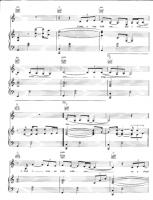
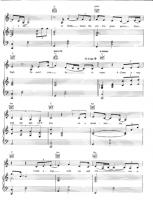
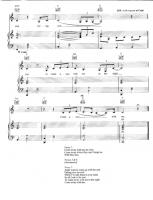
Utada Hikaru
Hikaru Utada (born January 19, 1983), also known by her fans as Hikki, is a singer-songwriter, arranger and record producer in Japan. She is well-known internationally for her two theme song contributions to Square Enix's Kingdom Hearts video game series:"Simple and Clean" and "Sanctuary".
Utada's debut album First Love became the Japan's biggest selling album of all time with over 7.65 million copies sold in Japan alone to date. The release of her later works only help her reign as one of Japan's top artist, with 3 of her Japanese studio albums being ranked in Top 10 best-selling albums ever in Japan (#1, #4, #8). She has had 12 #1 hits to date on the Oricon Singles chart, with two notable record achievements for a female solo or group artist: 5 of them being million-sellers and 4 placing in the Top 100 All-Time Best-selling Singles.
In addition, Utada has won the Nihon Golden Disk "Song of the Year" award for 14 of her singles since 2000 and has won the Golden Disc "Pop/Rock Album of the Year" award for all her 4 Japanese studio albums. In 2003, Utada was ranked the #24 Japanese pop artist in its survey of "Top 100 Japanese Pop Artists of All Time" by HMV, and #10 in HMV's "Top 30 Best Japanese Singers of All Time" in 2006.
In 2007, her single "Flavor of Life" reached #2 in worldwide digital download yearly single chart with over 7.2 million downloads, and she sold a total of 12 million digital ringtones and songs in that same year, making her the first artist ever to have that many digital sales in a year's time.
Utada's debut album First Love became the Japan's biggest selling album of all time with over 7.65 million copies sold in Japan alone to date. The release of her later works only help her reign as one of Japan's top artist, with 3 of her Japanese studio albums being ranked in Top 10 best-selling albums ever in Japan (#1, #4, #8). She has had 12 #1 hits to date on the Oricon Singles chart, with two notable record achievements for a female solo or group artist: 5 of them being million-sellers and 4 placing in the Top 100 All-Time Best-selling Singles.
In addition, Utada has won the Nihon Golden Disk "Song of the Year" award for 14 of her singles since 2000 and has won the Golden Disc "Pop/Rock Album of the Year" award for all her 4 Japanese studio albums. In 2003, Utada was ranked the #24 Japanese pop artist in its survey of "Top 100 Japanese Pop Artists of All Time" by HMV, and #10 in HMV's "Top 30 Best Japanese Singers of All Time" in 2006.
In 2007, her single "Flavor of Life" reached #2 in worldwide digital download yearly single chart with over 7.2 million downloads, and she sold a total of 12 million digital ringtones and songs in that same year, making her the first artist ever to have that many digital sales in a year's time.





Francis Lai
Francis Lai (born April 26, 1932 in Nice, Alpes-Maritimes, France) is a composer noted for his film scores.
While in his twenties, Francis Lai left home and went to Paris where he became part of the lively Montmartre music scene. In 1965 he met filmmaker Claude Lelouch and was hired to help write the score for the film, Un homme et une femme (A Man and A Woman). Released in 1966, the film was a major international success, earning a number of Academy Awards, and for the young Francis Lai, a Golden Globe Award nomination for "Best Original Score". This initial success brought more opportunities to work for the film industry both in his native France as well as in Great Britain and the United States. In 1969, he wrote the score for director René Clément's film, Rider On The Rain (Le Passager de la Pluie).
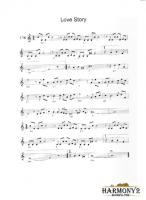
In 1970 Francis Lai won the Academy Award for Best Music, Original Score and the Golden Globe Award for Best Original Score for the film Love Story. In the United States, the soundtrack album went to No. 2 in the Billboard album charts and the film's theme, "Where Do I Begin" was a hit single with lyrics by Carl Sigman for traditional pop singer Andy Williams. The song would also be recorded successfully by Lai himself with a full orchestra and by Henry Mancini and Shirley Bassey. Francis Lai also wrote the music for the 1978 Love Story sequel titled Oliver's Story.
Lai has also had success with music written for softcore erotic films like Emmanuelle 2 (1975) and Bilitis (1977).
His composition Aujourd'hui C'est Toi is probably best known in the UK as the theme music for the long-running BBC television current affairs documentary series Panorama.
In a career spanning forty years, Francis Lai has also written music for television programs and alone or in collaboration with others has composed music for more than one hundred films and has personally written more than six hundred songs.
While in his twenties, Francis Lai left home and went to Paris where he became part of the lively Montmartre music scene. In 1965 he met filmmaker Claude Lelouch and was hired to help write the score for the film, Un homme et une femme (A Man and A Woman). Released in 1966, the film was a major international success, earning a number of Academy Awards, and for the young Francis Lai, a Golden Globe Award nomination for "Best Original Score". This initial success brought more opportunities to work for the film industry both in his native France as well as in Great Britain and the United States. In 1969, he wrote the score for director René Clément's film, Rider On The Rain (Le Passager de la Pluie).
In 1970 Francis Lai won the Academy Award for Best Music, Original Score and the Golden Globe Award for Best Original Score for the film Love Story. In the United States, the soundtrack album went to No. 2 in the Billboard album charts and the film's theme, "Where Do I Begin" was a hit single with lyrics by Carl Sigman for traditional pop singer Andy Williams. The song would also be recorded successfully by Lai himself with a full orchestra and by Henry Mancini and Shirley Bassey. Francis Lai also wrote the music for the 1978 Love Story sequel titled Oliver's Story.
Lai has also had success with music written for softcore erotic films like Emmanuelle 2 (1975) and Bilitis (1977).
His composition Aujourd'hui C'est Toi is probably best known in the UK as the theme music for the long-running BBC television current affairs documentary series Panorama.
In a career spanning forty years, Francis Lai has also written music for television programs and alone or in collaboration with others has composed music for more than one hundred films and has personally written more than six hundred songs.
Dizzy Gillespie
John Birks "Dizzy" Gillespie (pronounced /ɡɨˈlɛspi/; October 21, 1917 – January 6, 1993) was an American jazz trumpet player, bandleader, singer, and composer dubbed "the sound of surprise".
Together with Charlie Parker, he was a major figure in the development of bebop and modern jazz. He taught and influenced many other musicians, including trumpeters Miles Davis, Fats Navarro, Clifford Brown, Arturo Sandoval, Lee Morgan, Jon Faddis and Chuck Mangione.
Allmusic's Scott Yanow wrote that "Dizzy Gillespie's contributions to jazz were huge. One of the greatest jazz trumpeters of all time (some would say the best), Gillespie was such a complex player that his contemporaries ended up copying Miles Davis and Fats Navarro instead, and it was not until Jon Faddis's emergence in the 1970s that Dizzy's style was successfully recreated . . . Arguably Gillespie is remembered, by both critics and fans alike, as one of the greatest jazz trumpeters of all time.
In addition to featuring in the epochal moments in bebop, he was instrumental in founding Afro-Cuban jazz, the modern jazz version of what early-jazz pioneer Jelly Roll Morton referred to as the "Spanish Tinge". Gillespie was a trumpet virtuoso and gifted improviser, building on the virtuoso style of Roy Eldridge but adding layers of harmonic complexity previously unknown in jazz. Dizzy's beret and horn-rimmed spectacles, his scat singing, his bent horn, pouched cheeks and his light-hearted personality were essential in popularizing bebop.
Together with Charlie Parker, he was a major figure in the development of bebop and modern jazz. He taught and influenced many other musicians, including trumpeters Miles Davis, Fats Navarro, Clifford Brown, Arturo Sandoval, Lee Morgan, Jon Faddis and Chuck Mangione.
Allmusic's Scott Yanow wrote that "Dizzy Gillespie's contributions to jazz were huge. One of the greatest jazz trumpeters of all time (some would say the best), Gillespie was such a complex player that his contemporaries ended up copying Miles Davis and Fats Navarro instead, and it was not until Jon Faddis's emergence in the 1970s that Dizzy's style was successfully recreated . . . Arguably Gillespie is remembered, by both critics and fans alike, as one of the greatest jazz trumpeters of all time.
In addition to featuring in the epochal moments in bebop, he was instrumental in founding Afro-Cuban jazz, the modern jazz version of what early-jazz pioneer Jelly Roll Morton referred to as the "Spanish Tinge". Gillespie was a trumpet virtuoso and gifted improviser, building on the virtuoso style of Roy Eldridge but adding layers of harmonic complexity previously unknown in jazz. Dizzy's beret and horn-rimmed spectacles, his scat singing, his bent horn, pouched cheeks and his light-hearted personality were essential in popularizing bebop.
Brahms
Johannes Brahms (May 7, 1833 â April 3, 1897) was a German composer of the Romantic period. He was born in Hamburg and in his later years he settled in Vienna, Austria.
Brahms maintained a Classical sense of form and order in his works â in contrast to the opulence of the music of many of his contemporaries. Thus many admirers (though not necessarily Brahms himself) saw him as the champion of traditional forms and "pure music," as opposed to the New German embrace of program music.
Brahms venerated Beethoven: in the composer's home, a marble bust of Beethoven looked down on the spot where he composed, and some passages in his works are reminiscent of Beethoven's style. The main theme of the finale of Brahms's First Symphony is reminiscent of the main theme of the finale of Beethoven's Ninth, and when this resemblance was pointed out to Brahms he replied that any ass â jeder Esel â could see that.
Ein deutsches Requiem was partially inspired by his mother's death in 1865, but also incorporates material from a Symphony he started in 1854, but abandoned following Schumann's suicide attempt. He once wrote that the Requiem "belonged to Schumann". The first movement of this abandoned Symphony was re-worked as the first movement of the First Piano Concerto.
Brahms also loved the Classical composers Mozart and Haydn. He collected first editions and autographs of their works, and edited performing editions. He also studied the music of pre-classical composers, including Giovanni Gabrieli, Johann Adolph Hasse, Heinrich Schütz and especially Johann Sebastian Bach. His friends included leading musicologists, and with Friedrich Chrysander he edited an edition of the works of François Couperin. He looked to older music for inspiration in the arts of strict counterpoint; the themes of some of his works are modelled on Baroque sources, such as Bach's The Art of Fugue in the fugal finale of Cello Sonata No. 1, or the same composer's Cantata No. 150 in the passacaglia theme of the Fourth Symphony's finale.
Brahms maintained a Classical sense of form and order in his works â in contrast to the opulence of the music of many of his contemporaries. Thus many admirers (though not necessarily Brahms himself) saw him as the champion of traditional forms and "pure music," as opposed to the New German embrace of program music.
Brahms venerated Beethoven: in the composer's home, a marble bust of Beethoven looked down on the spot where he composed, and some passages in his works are reminiscent of Beethoven's style. The main theme of the finale of Brahms's First Symphony is reminiscent of the main theme of the finale of Beethoven's Ninth, and when this resemblance was pointed out to Brahms he replied that any ass â jeder Esel â could see that.
Ein deutsches Requiem was partially inspired by his mother's death in 1865, but also incorporates material from a Symphony he started in 1854, but abandoned following Schumann's suicide attempt. He once wrote that the Requiem "belonged to Schumann". The first movement of this abandoned Symphony was re-worked as the first movement of the First Piano Concerto.
Brahms also loved the Classical composers Mozart and Haydn. He collected first editions and autographs of their works, and edited performing editions. He also studied the music of pre-classical composers, including Giovanni Gabrieli, Johann Adolph Hasse, Heinrich Schütz and especially Johann Sebastian Bach. His friends included leading musicologists, and with Friedrich Chrysander he edited an edition of the works of François Couperin. He looked to older music for inspiration in the arts of strict counterpoint; the themes of some of his works are modelled on Baroque sources, such as Bach's The Art of Fugue in the fugal finale of Cello Sonata No. 1, or the same composer's Cantata No. 150 in the passacaglia theme of the Fourth Symphony's finale.
Jamey Aebersold
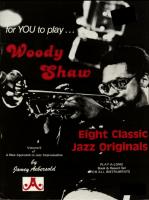
Jamey Aebersold (born July 21, 1939 in New Albany, Indiana) is an American jazz saxophonist and music educator. His "Play-A-Long" series of instructional book and CD collections, using the chord-scale system, the first of which was released in 1967, are an internationally renowned resource for jazz education. As of 2009, 126 of these collections have been published by Aebersold, who currently teaches musical improvisation at the University of Louisville. He is also an adept pianist, bassist, and banjoist.
Mika
Mica Penniman (born 18 August 1983), known as Mika, is a Lebanese-born, London-based, Grammy-nominated and BRIT Award-winning singer-songwriter, who has a recording contract with Casablanca Records and Universal Music. He rose to fame around the end of 2006 and the start of 2007. His birth name is Michael Holbrook Penniman.
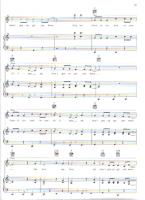
The Beatles
The Beatles were a pop and rock group from Liverpool, England formed in 1960. Primarily consisting of John Lennon (rhythm guitar, vocals), Paul McCartney (bass guitar, vocals), George Harrison (lead guitar, vocals) and Ringo Starr (drums, vocals) throughout their career, The Beatles are recognised for leading the mid-1960s musical "British Invasion" into the United States. Although their initial musical style was rooted in 1950s rock and roll and homegrown skiffle, the group explored genres ranging from Tin Pan Alley to psychedelic rock. Their clothes, styles, and statements made them trend-setters, while their growing social awareness saw their influence extend into the social and cultural revolutions of the 1960s. After the band broke up in 1970, all four members embarked upon solo careers.
The Beatles are one of the most commercially successful and critically acclaimed bands in the history of popular music, selling over a billion records internationally. In the United Kingdom, The Beatles released more than 40 different singles, albums, and EPs that reached number one, earning more number one albums (15) than any other group in UK chart history. This commercial success was repeated in many other countries; their record company, EMI, estimated that by 1985 they had sold over one billion records worldwide. According to the Recording Industry Association of America, The Beatles have sold more albums in the United States than any other band. In 2004, Rolling Stone magazine ranked The Beatles number one on its list of 100 Greatest Artists of All Time. According to that same magazine, The Beatles' innovative music and cultural impact helped define the 1960s, and their influence on pop culture is still evident today. In 2008, Billboard magazine released a list of top-selling Hot 100 artists to celebrate the chart's fiftieth anniversary; The Beatles reached #1 again.
The Beatles are one of the most commercially successful and critically acclaimed bands in the history of popular music, selling over a billion records internationally. In the United Kingdom, The Beatles released more than 40 different singles, albums, and EPs that reached number one, earning more number one albums (15) than any other group in UK chart history. This commercial success was repeated in many other countries; their record company, EMI, estimated that by 1985 they had sold over one billion records worldwide. According to the Recording Industry Association of America, The Beatles have sold more albums in the United States than any other band. In 2004, Rolling Stone magazine ranked The Beatles number one on its list of 100 Greatest Artists of All Time. According to that same magazine, The Beatles' innovative music and cultural impact helped define the 1960s, and their influence on pop culture is still evident today. In 2008, Billboard magazine released a list of top-selling Hot 100 artists to celebrate the chart's fiftieth anniversary; The Beatles reached #1 again.

Coldplay
Coldplay are a rock band formed in London, England in 1997. The group comprises vocalist/pianist/guitarist Chris Martin, lead guitarist Jonny Buckland, bassist Guy Berryman, and drummer/multi-instrumentalist Will Champion. Coldplay have sold 34.6 million albums, and are also known for their hit singles, such as "Yellow", "The Scientist", "Speed of Sound", "Fix You", "Viva la Vida" and the Grammy Award-winning "Clocks".
Coldplay achieved worldwide fame with the release of their single "Yellow", followed by their debut album, Parachutes (2000), which was nominated for the Mercury Prize. Its follow-up, A Rush of Blood to the Head (2002) won multiple awards such as NME's Album of the Year and was later included on Rolling Stone magazine's 500 Greatest Albums of All Time list, ranking at #473. Their next release, X&Y (2005), received a slightly less enthusiastic yet still generally positive reception. The band's fourth studio album, Viva la Vida or Death and All His Friends (2008), was produced by Brian Eno and released again to largely favourable reviews. All of Coldplay's albums have enjoyed great commercial success.
Coldplay's early material was compared to acts such as Jeff Buckley, U2, and Travis. Coldplay have been an active supporter of various social and political causes, such as Oxfam's Make Trade Fair campaign and Amnesty International. The group have also performed at various charity projects such as Band Aid 20, Live 8, and the Teenage Cancer Trust.
Coldplay achieved worldwide fame with the release of their single "Yellow", followed by their debut album, Parachutes (2000), which was nominated for the Mercury Prize. Its follow-up, A Rush of Blood to the Head (2002) won multiple awards such as NME's Album of the Year and was later included on Rolling Stone magazine's 500 Greatest Albums of All Time list, ranking at #473. Their next release, X&Y (2005), received a slightly less enthusiastic yet still generally positive reception. The band's fourth studio album, Viva la Vida or Death and All His Friends (2008), was produced by Brian Eno and released again to largely favourable reviews. All of Coldplay's albums have enjoyed great commercial success.
Coldplay's early material was compared to acts such as Jeff Buckley, U2, and Travis. Coldplay have been an active supporter of various social and political causes, such as Oxfam's Make Trade Fair campaign and Amnesty International. The group have also performed at various charity projects such as Band Aid 20, Live 8, and the Teenage Cancer Trust.
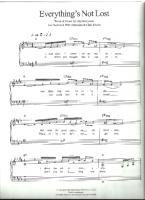
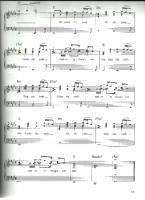
Toshiro Masuda
Toshio Masuda (舛田 利雄 Masuda Toshio?, born October 5, 1927 in Kobe, Hyōgo, Japan) is a Japanese film director. He developed a reputation as a consistent box office hit-maker. Over the course of five decades, 16 of his films made the yearly top ten lists at the Japanese box office—a second place record in the industry. Between 1958 and 1968 he directed 52 films for the Nikkatsu Company. He was their top director of action films and worked with the company's top stars, including Yujiro Ishihara with whom he made 25 films. After the breakdown of the studio system, he moved on to a succession of big-budget movies including the American-Japanese co-production Tora! Tora! Tora! (1970) and the science fiction epic Catastrophe 1999: The Prophecies of Nostradamus (1974). He worked on such anime productions as the Space Battleship Yamato series. His corporate drama Company Funeral (1989) earned him a Japanese Academy Award nomination and wins at the Blue Ribbon Awards and Mainichi Film Awards. In Japan, his films are well remembered by fans and called genre landmarks by critics. He remains little known abroad save for rare exceptions of his post-Nikkatsu work such as Tora! Tora! Tora!. However, a number of his films were screened in a 2005 Nikkatsu Action Cinema retrospective in Italy and a few have since made their way to the United States. At the age of 81, he is currently prepping to helm Space Battleship Yamato: Rebirth (2009).


The Corrs
The Corrs are a Celtic folk rock group from Dundalk, County Louth, Ireland. The group consists of the Corr siblings: Andrea (vocals, tin whistle); Sharon (violin, vocals); Caroline (drums, percussion, bodhrán, vocals); and Jim (guitar, keyboards, vocals).
The Corrs came to international prominence with their performance at the 1996 Summer Olympics in Atlanta, Georgia. Since then, they have released five studio albums and numerous singles, which have reached platinum in many countries. Talk on Corners, their most successful album to date, reached multi-platinum status in Australia and the UK.
The Corrs have been actively involved in philanthropic activities. They have performed in numerous charity concerts such as the Prince's Trust in 2004 and Live 8 alongside Bono in 2005. The same year, they were awarded honorary MBEs for their contributions to music and charity. The Corrs are on hiatus because Sharon, Jim, and Caroline are raising families, while Andrea is pursuing a solo career.
The Corrs came to international prominence with their performance at the 1996 Summer Olympics in Atlanta, Georgia. Since then, they have released five studio albums and numerous singles, which have reached platinum in many countries. Talk on Corners, their most successful album to date, reached multi-platinum status in Australia and the UK.
The Corrs have been actively involved in philanthropic activities. They have performed in numerous charity concerts such as the Prince's Trust in 2004 and Live 8 alongside Bono in 2005. The same year, they were awarded honorary MBEs for their contributions to music and charity. The Corrs are on hiatus because Sharon, Jim, and Caroline are raising families, while Andrea is pursuing a solo career.

Michel Petrucciani
Michel Petrucciani (December 28, 1962, Orange, France – January 6, 1999, New York City, USA), was a French jazz pianist.
Michel Petrucciani came from an Italo-French family with a musical background. His father Tony played guitar, his brother Louis played bass and his last brother Philippe plays guitar too. Michel was born with osteogenesis imperfecta, which is a genetic disease that causes brittle bones and in his case short stature. It is also often linked to pulmonary ailments. In his early career his father and brother occasionally carried him, literally, because he could not walk far on his own unaided. In certain respects though he considered it an advantage as it got rid of distractions, like sports, that other boys tended to become involved in.
At an early age he became an enthusiast of Duke Ellington and wished to become a pianist like him. Although he trained for years as a classical pianist, jazz remained his main interest. He gave his first professional concert at 13. At this point in his life he was still quite fragile and had to be carried to and from the piano. His size meant that he required aids to reach the piano's pedals, but his hands were average in length. This had its advantages, however: at the start of his career Petrucciani's manager would often smuggle him into hotel rooms in a suitcase in a bid to save money. By the age of 18 he was part of a successful trio. He moved to the US in 1982, where he successfully encouraged Charles Lloyd to resume playing actively. On February 22, 1985, with Petrucciani cradled in his arms, Lloyd walked onto the stage at Town Hall in New York City and sat him on his piano stool for what would be an historic evening in jazz history: the filming of One Night with Blue Note. The film's director John Jopson would later recall in the reissued liner notes that the moment moved him to tears. In 1986 Petrucciani recorded a live album with Wayne Shorter and Jim Hall. He also played with diverse figures in the US jazz scene including Dizzy Gillespie.
Michel Petrucciani came from an Italo-French family with a musical background. His father Tony played guitar, his brother Louis played bass and his last brother Philippe plays guitar too. Michel was born with osteogenesis imperfecta, which is a genetic disease that causes brittle bones and in his case short stature. It is also often linked to pulmonary ailments. In his early career his father and brother occasionally carried him, literally, because he could not walk far on his own unaided. In certain respects though he considered it an advantage as it got rid of distractions, like sports, that other boys tended to become involved in.
At an early age he became an enthusiast of Duke Ellington and wished to become a pianist like him. Although he trained for years as a classical pianist, jazz remained his main interest. He gave his first professional concert at 13. At this point in his life he was still quite fragile and had to be carried to and from the piano. His size meant that he required aids to reach the piano's pedals, but his hands were average in length. This had its advantages, however: at the start of his career Petrucciani's manager would often smuggle him into hotel rooms in a suitcase in a bid to save money. By the age of 18 he was part of a successful trio. He moved to the US in 1982, where he successfully encouraged Charles Lloyd to resume playing actively. On February 22, 1985, with Petrucciani cradled in his arms, Lloyd walked onto the stage at Town Hall in New York City and sat him on his piano stool for what would be an historic evening in jazz history: the filming of One Night with Blue Note. The film's director John Jopson would later recall in the reissued liner notes that the moment moved him to tears. In 1986 Petrucciani recorded a live album with Wayne Shorter and Jim Hall. He also played with diverse figures in the US jazz scene including Dizzy Gillespie.
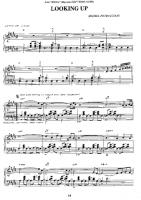
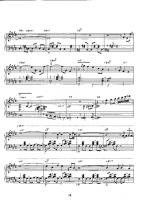
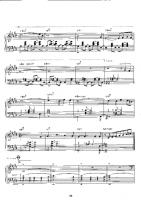
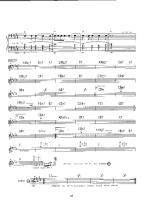
Stephen Schwartz
Stephen Lawrence Schwartz (born March 6, 1948) is an American musical theater lyricist and composer. In a career already spanning over four decades, Schwartz has written such hit musicals as Godspell (1971), Pippin (1972) and Wicked (2003). He has also contributed lyrics for a number of successful films, including Pocahontas (1995), The Hunchback of Notre Dame (1996), The Prince of Egypt (1998; music and lyrics) and Enchanted (2007). Schwartz has won the Drama Desk Award for Outstanding Lyrics, three Grammy Awards, and three Academy Awards and has been nominated for six Tony Awards.

Richard Wagner
Wilhelm Richard Wagner (pronounced /ˈvɑːɡnər/, German pronunciation: ; 22 May 1813 – 13 February 1883) was a German composer, conductor, theatre director and essayist, primarily known for his operas (or "music dramas", as they were later called). Wagner's compositions, particularly those of his later period, are notable for their complex texture, rich harmonies and orchestration, and the elaborate use of leitmotifs: musical themes associated with individual characters, places, ideas or plot elements. Unlike most other opera composers, Wagner wrote both the music and libretto for every one of his stage works. Famous extracts from his operas include the "Ride of the Valkyries" and the Bridal Chorus from Lohengrin, popularly known as the wedding march "Here Comes the Bride".
Initially establishing his reputation as a composer of works such as The Flying Dutchman and Tannhäuser which were in the romantic traditions of Weber and Meyerbeer, Wagner transformed operatic thought through his concept of the Gesamtkunstwerk ("total work of art"). This would achieve the synthesis of all the poetic, visual, musical and dramatic arts, and was announced in a series of essays between 1849 and 1852. Wagner realised this concept most fully in the first half of the monumental four-opera cycle Der Ring des Nibelungen. However, his thoughts on the relative importance of music and drama were to change again and he reintroduced some traditional operatic forms into his last few stage works including Die Meistersinger von Nürnberg.
Wagner pioneered advances in musical language, such as extreme chromaticism and quickly shifting tonal centres, which greatly influenced the development of European classical music. His Tristan und Isolde is sometimes described as marking the start of modern music. Wagner's influence spread beyond music into philosophy, literature, the visual arts and theatre. He had his own opera house built, the Bayreuth Festspielhaus, which contained many novel design features. It was here that the Ring and Parsifal received their premieres and where his most important stage works continue to be performed today in an annual festival run by his descendants. Wagner's views on conducting were also highly influential. His extensive writings on music, drama and politics have all attracted extensive comment; not least for their frequently antisemitic content.
Wagner achieved all of this despite a life characterised, until his last decades, by political exile, turbulent love affairs, poverty and repeated flight from his creditors. His pugnacious personality and often outspoken views on music, politics and society made him a controversial figure during his life. He has remained one to this day. The impact of his his ideas can be traced in many of the arts throughout the twentieth century.
Initially establishing his reputation as a composer of works such as The Flying Dutchman and Tannhäuser which were in the romantic traditions of Weber and Meyerbeer, Wagner transformed operatic thought through his concept of the Gesamtkunstwerk ("total work of art"). This would achieve the synthesis of all the poetic, visual, musical and dramatic arts, and was announced in a series of essays between 1849 and 1852. Wagner realised this concept most fully in the first half of the monumental four-opera cycle Der Ring des Nibelungen. However, his thoughts on the relative importance of music and drama were to change again and he reintroduced some traditional operatic forms into his last few stage works including Die Meistersinger von Nürnberg.
Wagner pioneered advances in musical language, such as extreme chromaticism and quickly shifting tonal centres, which greatly influenced the development of European classical music. His Tristan und Isolde is sometimes described as marking the start of modern music. Wagner's influence spread beyond music into philosophy, literature, the visual arts and theatre. He had his own opera house built, the Bayreuth Festspielhaus, which contained many novel design features. It was here that the Ring and Parsifal received their premieres and where his most important stage works continue to be performed today in an annual festival run by his descendants. Wagner's views on conducting were also highly influential. His extensive writings on music, drama and politics have all attracted extensive comment; not least for their frequently antisemitic content.
Wagner achieved all of this despite a life characterised, until his last decades, by political exile, turbulent love affairs, poverty and repeated flight from his creditors. His pugnacious personality and often outspoken views on music, politics and society made him a controversial figure during his life. He has remained one to this day. The impact of his his ideas can be traced in many of the arts throughout the twentieth century.



Jamison Statema
Jamison Statema, a Dove award winning producer, songwriter, and performer who loves to make music for kids of all ages! His songs ...



Gorillaz
Gorillaz are an English virtual band created in 1998 by Damon Albarn and Jamie Hewlett. The band consists of four animated members: 2D (lead vocals, keyboard), Murdoc Niccals (bass guitar), Noodle (guitar, keyboard, and backing vocals) and Russel Hobbs (drums and percussion). These members are completely fictional and are not personas of any "real life" musicians involved in the project. Their fictional universe is explored through the band's website and music videos, as well as a number of other media, such as short cartoons. The music is a collaboration between various musicians, with Albarn being the only permanent musical contributor. Writers and critics have described their music as alternative rock, Britpop, trip hop, hip hop, electronica, indie, dub, reggae and pop.
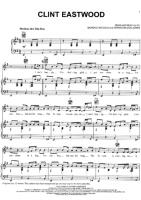
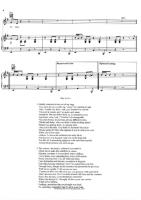
Ennio Morricone
Ennio Morricone, OMRI (born November 10, 1928), is an Italian composer and conductor. He has composed and arranged scores for more than 500 film and television productions. Morricone is considered as one of the most influential film composers since the late 1950s. He is well-known for his long-term collaborations with international acclaimed directors such as Sergio Leone, Brian De Palma, Barry Levinson, and Giuseppe Tornatore.
He wrote the characteristic film scores of Leone's Spaghetti Westerns A Fistful of Dollars (1964), For a Few Dollars More (1965), The Good, the Bad and the Ugly (1966), Once Upon a Time in the West (1968), The Great Silence (1968), and My Name Is Nobody (1973). In the 80s, Morricone composed the scores for John Carpenter's horror movie The Thing (1982), Leone's Once Upon a Time in America (1984), Roland Joffé's The Mission (1986), Brian De Palma's The Untouchables (1987) and Giuseppe Tornatore's Cinema Paradiso (1988).
His more recent compositions include the scores for Oliver Stone's U Turn (1997), Tornatore's The Legend of 1900 (1998) and Malèna (2000), Mission to Mars (2000) by Brian De Palma, Fateless (2005), and Baaria - La porta del vento (2009). Ennio Morricone has won two Grammy Awards, two Golden Globes and five Anthony Asquith Awards for Film Music by BAFTA in 1979–1992. He has been nominated for five Academy Awards for Best Music, Original Score in 1979–2001. Morricone received the Honorary Academy Award in 2007 "for his magnificent and multifaceted contributions to the art of film music". He was the second composer to receive this award after its introduction in 1928.
He wrote the characteristic film scores of Leone's Spaghetti Westerns A Fistful of Dollars (1964), For a Few Dollars More (1965), The Good, the Bad and the Ugly (1966), Once Upon a Time in the West (1968), The Great Silence (1968), and My Name Is Nobody (1973). In the 80s, Morricone composed the scores for John Carpenter's horror movie The Thing (1982), Leone's Once Upon a Time in America (1984), Roland Joffé's The Mission (1986), Brian De Palma's The Untouchables (1987) and Giuseppe Tornatore's Cinema Paradiso (1988).
His more recent compositions include the scores for Oliver Stone's U Turn (1997), Tornatore's The Legend of 1900 (1998) and Malèna (2000), Mission to Mars (2000) by Brian De Palma, Fateless (2005), and Baaria - La porta del vento (2009). Ennio Morricone has won two Grammy Awards, two Golden Globes and five Anthony Asquith Awards for Film Music by BAFTA in 1979–1992. He has been nominated for five Academy Awards for Best Music, Original Score in 1979–2001. Morricone received the Honorary Academy Award in 2007 "for his magnificent and multifaceted contributions to the art of film music". He was the second composer to receive this award after its introduction in 1928.


Wizet
Wizet is a game development studio located in Seoul, South Korea, and is popular for its hit game, MapleStory. Wizet developed a franchise system and expanded its services to Japan, China, Thailand, Malaysia, Singapore, Taiwan, the USA, Europe, and Brazil. Eventually, Wizet reached the global world after having finished developing key features of MapleStory.


Search for Free Sheet Music
You can make a search through the entire collection of sheets.
You can make a search through the entire collection of sheets.
Hi, fellow musicians!
There is no registration required to download the sheets but you can subscribe to our mailing list to get notified of new sheets.
There is no registration required to download the sheets but you can subscribe to our mailing list to get notified of new sheets.
Latest Artists
Peter Billam
× 1
Galt MacDermot × 3
Runescape × 1
David Arivett × 1
Roget Pontbriand × 1
Suikoden IV × 1
Prokofiev × 1
Carl Saunders × 1
Lady Antebellum × 1
Zero no Tsukaima × 1
Sun Ra × 1
Wayne shorter × 1
Consuelo Velazquez × 1
Samuel Wesley × 1
Connie Francis × 1
Ari Pulkkinen × 1
Ludwig van Beethoven Composer × 1
Michael Gibbs × 1
Enrique Granados × 1
Pamela Wedgwood × 1
Pandora Hearts × 1
Cécile Louise Stéphanie C... × 1
Orazio Benevoli × 1
Saint Saens × 1
Mariachi Sol de Mexico × 1
Jazz Standard × 1
Elisabeth Jelinek × 1
OneRepublic × 1
Felipe Rose × 1
Zhang Xiao Hong × 1
Irving Berlin × 1
Asher Book × 1
Erik Satie × 3
Amy Beach × 1
George Bennard × 1
Jared Anderson × 1
Britney Spears × 5
Marc-André Hamelin × 1
Friedrich Wieck × 1
Laura Shigihara × 1
Albert Hammond × 1
Antonio Lotti × 1
Samuel Lane × 1
Bill conti × 1
Anne Murray × 1
The Saint × 1
Kohei Tanaka × 1
Victor Lavallen × 1
DuckTales × 1
Hugh Martin × 1
Galt MacDermot × 3
Runescape × 1
David Arivett × 1
Roget Pontbriand × 1
Suikoden IV × 1
Prokofiev × 1
Carl Saunders × 1
Lady Antebellum × 1
Zero no Tsukaima × 1
Sun Ra × 1
Wayne shorter × 1
Consuelo Velazquez × 1
Samuel Wesley × 1
Connie Francis × 1
Ari Pulkkinen × 1
Ludwig van Beethoven Composer × 1
Michael Gibbs × 1
Enrique Granados × 1
Pamela Wedgwood × 1
Pandora Hearts × 1
Cécile Louise Stéphanie C... × 1
Orazio Benevoli × 1
Saint Saens × 1
Mariachi Sol de Mexico × 1
Jazz Standard × 1
Elisabeth Jelinek × 1
OneRepublic × 1
Felipe Rose × 1
Zhang Xiao Hong × 1
Irving Berlin × 1
Asher Book × 1
Erik Satie × 3
Amy Beach × 1
George Bennard × 1
Jared Anderson × 1
Britney Spears × 5
Marc-André Hamelin × 1
Friedrich Wieck × 1
Laura Shigihara × 1
Albert Hammond × 1
Antonio Lotti × 1
Samuel Lane × 1
Bill conti × 1
Anne Murray × 1
The Saint × 1
Kohei Tanaka × 1
Victor Lavallen × 1
DuckTales × 1
Hugh Martin × 1